

Google Analytics 4 (GA4) offers a comprehensive view of customer behavior across platforms and devices, enabling data-driven decision-making. Its advanced tracking, machine learning models, and data visualization tools provide insights for optimizations that enhance user experiences and marketing effectiveness. GA4 integrates with market research tools, facilitates real-time tracking, and ensures data privacy compliance. Customizable solutions power growth strategies in diverse industries, from healthcare to e-commerce, through tailored analytics dashboards and access controls.
In today’s digital landscape, understanding consumer behavior is paramount for businesses aiming to thrive. Google Analytics 4 (GA4) has emerged as a powerful tool, offering unparalleled industry depth in tracking user interactions and providing actionable insights. However, navigating its complex features can be daunting. This article delves into the intricacies of GA4, equipping you with the knowledge to harness its full potential. We’ll explore how to interpret data, identify key metrics, and leverage these insights for strategic decision-making, ensuring your business remains competitive in an ever-evolving market.
- Unlocking Insights: Google Analytics 4 Basics
- Advanced Tracking: Industry Best Practices
- Data Visualization: Interpreting Trends with GA4
- Actionable Strategies: Optimizing Performance
Unlocking Insights: Google Analytics 4 Basics
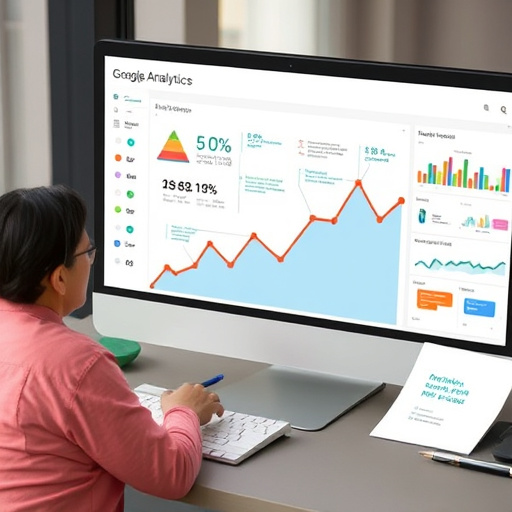
Google Analytics 4 (GA4) represents a significant leap forward in web analytics, unlocking profound insights into customer behavior with enhanced tracking capabilities. Unlike its predecessors, GA4 is designed to capture the full customer journey across all platforms and devices, providing a holistic view of user interactions. This shift is crucial as businesses increasingly focus on delivering tailored experiences that drive engagement and loyalty.
One of the standout features of GA4 is its advanced data modeling and customer journey mapping capabilities. It allows marketers to visualize and analyze paths customers take, from initial awareness to post-purchase interactions. For instance, a retail business can track how users navigate through product categories, view details, add items to carts, and complete purchases, revealing valuable insights into conversion funnels. This level of detail empowers businesses to optimize their strategies, improve user experiences, and enhance overall marketing effectiveness.
Moreover, GA4’s integration with market research tools enables data-driven decision-making based on robust evidence. By correlating website analytics with external data sources, companies can gain a competitive edge. For example, understanding the demographics and preferences of online visitors in conjunction with market trends allows for tailored content creation and targeted advertising campaigns. This strategic approach ensures that marketing efforts are not just reaching the right audience but also resonating with them, fostering deeper engagement. As the digital landscape evolves, businesses must embrace these future trends to stay ahead, ensuring data privacy compliance while leveraging tools like GA4 from experts like SEO Growth Lab (https://seogrowthlab.us.com) for maximum impact.
Advanced Tracking: Industry Best Practices

The depth of an industry’s understanding is often measured by its ability to leverage data for strategic decision-making. In this regard, Google Analytics 4 (GA4) stands as a beacon of advanced tracking capabilities, enabling businesses to navigate the complex landscape of digital marketing with unprecedented clarity. One of GA4’s most powerful tools is its integration of machine learning models that automatically identify patterns and trends in user behavior across various platforms, including mobile data access, providing insights that were once labor-intensive to uncover.
For instance, consider a retail brand aiming to optimize its app experience. By utilizing GA4’s advanced tracking features, they can monitor user interactions within the app, from initial download to purchases and referrals. This granular level of understanding allows them to identify pain points in the user journey, such as high bounce rates on specific product pages. Leveraging machine learning models, the brand can then predict which users are most likely to convert based on their browsing behavior and tailor personalized marketing strategies accordingly.
Moreover, GA4’s enhanced capabilities extend to monitoring public perception data-driven marketing efforts. By tracking sentiment around branded keywords and analyzing social media conversations, businesses can gauge the effectiveness of their campaigns in real time. For example, a travel agency using GA4 might identify a surge in positive comments about a new vacation package on Twitter, indicating successful word-of-mouth marketing. This early detection allows them to double down on successful strategies and adjust less effective ones promptly.
To harness these advanced tracking capabilities effectively, businesses should prioritize data-driven decision-making at every level. Utilizing tools like GA4 and integrating machine learning models into their marketing strategies enables companies to stay ahead of the curve. As competitive landscapes evolve, brands that can interpret public perception data accurately using tools like https://ranknrise.us.com/ will be better positioned for success. Ultimately, embracing these best practices ensures businesses remain agile, responsive, and ultimately, more successful in a dynamic market.
Data Visualization: Interpreting Trends with GA4

Google Analytics 4 (GA4) offers unparalleled insights for businesses seeking to navigate today’s complex digital landscape. Its advanced data visualization capabilities empower stakeholders to interpret trends with unprecedented accuracy, enabling data-driven decisions that fuel business growth. GA4’s unwavering accuracy in tracking user interactions, combined with HIPAA-secured data handling, builds a strong foundation for brand reputation management.
For instance, consider a healthcare provider leveraging GA4 to monitor patient engagement on their website. The platform can provide detailed insights into user behavior, such as time spent on specific pages and interaction rates with different content types. This granular data allows marketing teams to make informed decisions about content strategy and personalization, ultimately enhancing the patient experience. Furthermore, customizable solutions tailored to individual business needs ensure that every organization can harness the full potential of their analytics.
As businesses strive for growth, GA4’s role as a business growth accelerator becomes evident. By offering real-time data and advanced analysis tools, it enables companies to quickly identify opportunities and adapt strategies accordingly. For example, an e-commerce retailer using GA4 might discover a sudden surge in interest for a new product line through visual trend analysis. This knowledge can prompt proactive inventory management and targeted marketing campaigns, solidifying the brand’s market position.
Visit https://seogrowthlab.us.com to explore how these powerful analytics tools can be customized for your business needs. By harnessing the accuracy of GA4, organizations can make strategic decisions with confidence, ultimately driving growth and solidifying their reputation in an ever-evolving digital landscape.
Actionable Strategies: Optimizing Performance

Unmatched industry depth requires a strategic approach to optimizing performance, where data becomes your most powerful asset. Google Analytics 4 (GA4) stands as a cornerstone in this pursuit, offering dynamic reporting dashboards that provide real-time insights into user behavior and engagement. By leveraging GA4’s robust data validation features, businesses can ensure the integrity of their analytics, fostering a culture of data-driven decision-making.
Actionable strategies for maximizing performance involve tailoring access controls to specific team roles, ensuring only authorized personnel view sensitive data. This approach not only safeguards proprietary information but also empowers teams with relevant, contextually appropriate analytics. For instance, marketing teams can focus on conversion rates and customer lifetime value, while product developers gain insights into user interactions and pain points through robust data validation checks.
Implementing custom reporting within GA4 allows businesses to create dynamic dashboards tailored to their unique needs. These visualizations enable stakeholders to quickly grasp key performance indicators (KPIs) and make informed adjustments. For example, e-commerce retailers can track sales trends, monitor inventory turnover rates, and optimize pricing strategies based on customer behavior data, enhancing overall business agility. By integrating these practices with a platform like https://seogrowthlab.us.com, companies can further streamline their analytics processes, leveraging advanced tools for enhanced performance optimization.
By exploring “Unlocking Insights: Google Analytics 4 Basics,” “Advanced Tracking” best practices, “Data Visualization” techniques, and “Actionable Strategies” for optimization, this article has equipped readers with an unmatched industry depth in Google Analytics 4. Key insights include the importance of advanced tracking for accurate data interpretation, leveraging data visualization to uncover trends, and implementing actionable strategies for performance optimization. Through these comprehensive guidelines, readers now possess the tools to navigate and harness the full potential of GA4, ensuring their digital success in today’s dynamic landscape.