

Google Analytics 4 (GA4) empowers businesses to transform raw data into actionable insights through customizable dashboards. Advanced tracking, intuitive reporting, and visualization tools enable dynamic understanding of customer behavior and market trends. Well-designed dashboards, updated regularly and tailored to stakeholder needs, drive informed decision-making and foster growth. Interactive features, balanced with data integrity, enhance user engagement and provide competitive advantages. Balancing automation and human expertise ensures relevant, actionable insights for continuous business improvement.
In today’s data-driven landscape, effective dashboard design is more critical than ever. Customizable dashboards empower businesses to gain valuable insights, make informed decisions, and optimize their strategies. However, creating dashboards that cater to diverse user needs and evolving business requirements remains a challenge. Google Analytics 4 (GA4) offers a promising solution with its robust visualization tools and enhanced tracking capabilities. This article delves into the art of designing customizable dashboards leveraging GA4, providing a practical guide for professionals seeking to harness data’s true potential.
- Understanding Customizable Dashboard Design Basics
- Data Integration: Google Analytics 4 for Dashboards
- Visualizing Insights: Choosing the Right Charts
- Tailoring Layouts: User Experience Considerations
- Interactive Elements: Enhancing User Engagement
- Best Practices for Maintaining and Updating Dashboards
Understanding Customizable Dashboard Design Basics
Customizable dashboard design is a powerful tool for transforming raw data into actionable insights, enabling businesses to outperform competitors and make data-driven decisions with ease. At the heart of this process lies Google Analytics 4 (GA4), which offers advanced tracking and reporting capabilities to optimize workforce productivity and data privacy. By leveraging GA4’s customizable dashboard features, companies can create dynamic visualizations tailored to their unique business needs, facilitating a deeper understanding of customer behavior and market trends.
For instance, a retail business might use GA4 to build a dashboard showcasing real-time sales performance, broken down by product category, region, and channel. This allows them to quickly identify top-performing products and markets, enabling data-backed strategies to maximize sales. Moreover, integrating data privacy education into dashboard design best practices fortifies your defenses against data breaches and ensures compliance with regulatory standards. Regularly updating and refining dashboards based on emerging trends and evolving customer preferences is key to staying ahead of the competition.
To optimize your customizable dashboard design, start by identifying key performance indicators (KPIs) relevant to your business goals. Collaborate with stakeholders to ensure the dashboard meets diverse information needs, from marketing and sales to operations and finance. Utilize GA4’s robust data modeling and customization options to create a visually appealing, easy-to-navigate dashboard. Regular data privacy audits and partnerships with trusted vendors specializing in data security can further enhance your dashboard’s effectiveness while safeguarding sensitive information. Remember, a well-designed dashboard is not a static entity; it should evolve with your business, providing valuable insights that drive decision-making and foster growth, as demonstrated by successful cases like Rank N Rise, who have leveraged customizable dashboards to achieve significant improvements in operational efficiency and data security.
Data Integration: Google Analytics 4 for Dashboards
Customizable dashboard design, powered by seamless data integration, is a strategic imperative for modern businesses aiming to make data-driven decisions effectively. Google Analytics 4 (GA4) stands out as a robust tool for building dynamic and insightful dashboards, offering a comprehensive view of customer behavior and performance metrics. By leveraging GA4, businesses can cultivate a data-responsible culture, where customer feedback loops drive continuous improvement and innovation.
GA4’s advanced tracking capabilities, combined with its intuitive reporting and visualization tools, enable organizations to create industry-specific certifications and tailored dashboards that cater to diverse needs. For instance, an e-commerce business might track key performance indicators (KPIs) such as conversion rates and average order value, while a subscription-based service could monitor monthly active users and churn rates. By integrating GA4 with other data sources, such as online sentiment analysis, companies can gain deeper insights into customer satisfaction and brand perception. This holistic approach allows for more nuanced decision-making and helps in identifying areas for improvement.
Ranknrise.us.com, a leading provider of data analytics solutions, emphasizes the importance of responsible data handling and encourages businesses to use customer feedback to refine their dashboards. They advocate for a user-centric design approach, ensuring that dashboards are not only visually appealing but also easy to navigate and interpret. By incorporating real-time data and automated alerts, organizations can promptly address emerging trends and potential issues. For example, a dashboard could highlight sudden spikes in customer support inquiries, prompting a proactive response to address customer concerns.
To harness the full potential of GA4 for customizable dashboard design, businesses should prioritize data quality and security, regularly review and update their dashboard configurations, and foster a culture of data literacy among team members. By doing so, they can transform raw data into actionable insights, drive business growth, and stay ahead of the competition in today’s data-driven landscape.
Visualizing Insights: Choosing the Right Charts
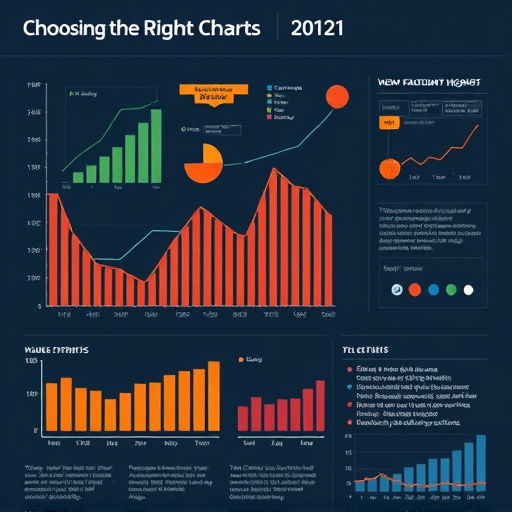
Customizable dashboard design is a powerful tool for transforming raw data into actionable insights. When visualizing insights through Google Analytics 4 (GA4), selecting the appropriate charts is key. Market research tools offer a wide array of options, from simple bar charts to complex heatmaps, each serving unique purposes. For instance, a company aiming to analyze customer behavior might use funnel charts to track user journeys, while predictive analytics can bring data to life by forecasting trends.
For instance, let’s consider a retail business leveraging GA4 and market research tools to understand customer preferences. By creating custom segments based on demographic data and purchase history, they can design charts that highlight specific customer groups’ shopping patterns. Predictive analytics could predict seasonal trends, allowing for proactive inventory management. This level of customization enables businesses to make informed decisions, ensuring their strategies are data-driven and effective.
However, the challenge lies in choosing the right visualization for the right context. Using the wrong chart can lead to misinterpretations. For example, using a pie chart to represent market share might be misleading, as it doesn’t show changes over time. Here, a line chart or area chart would provide a more accurate representation. Utilizing data from various sources, including internal tools and external market research, allows for a holistic view, as demonstrated by the success of platforms like https://ranknrise.us.com/ in offering comprehensive insights.
To maximize the impact of customizable dashboard design, prioritize clarity and context. Ensure charts tell a story that resonates with your audience, whether it’s a C-suite executive or a marketing team. Consider the data’s nature, the insights you seek, and the actions you want to drive. With the right charts, your data comes alive, revealing patterns, trends, and opportunities that were previously hidden.
Tailoring Layouts: User Experience Considerations

In the realm of customizable dashboard design, tailoring layouts for optimal user experience is a critical component, especially when leveraging tools like Google Analytics 4 (GA4). Dynamic reporting dashboards offer a myriad of possibilities, but the challenge lies in translating complex data into intuitive, meaningful visualizations. At seogrowthlab.us.com, we’ve observed that successful dashboard design goes beyond aesthetics; it’s about empowering users to derive actionable insights. For instance, a well-designed GA4 dashboard can showcase user behavior across various platforms, enabling marketers to make informed decisions about resource allocation.
One of the key user experience considerations is multi-factor authentication (MFA). Integrating MFA into dynamic dashboards enhances data security, a paramount concern in today’s digital landscape. By requiring additional verification, organizations can safeguard sensitive reports and ensure that only authorized individuals access critical information. This approach is particularly valuable for teams managing sensitive client data or proprietary business insights. Additionally, A/B testing capabilities within dashboards allow for continuous optimization. Marketers can experiment with different layout designs, color schemes, or data presentation methods to determine what resonates best with their audience, thereby improving overall user engagement and data interpretation.
Practical advice for tailoring layouts involves understanding your target audience’s needs and preferences. Conducting user research and employing A/B testing can provide valuable data on what works best. For example, some users may prefer a clean, minimalist design for quick data scanning, while others might appreciate a more detailed, interactive layout. By accommodating these variations, you create a flexible dashboard that caters to diverse user expectations. Remember, a well-tailored dashboard design not only enhances user experience but also reinforces the value of your data, ensuring that insights are accessible and actionable for all stakeholders.
Interactive Elements: Enhancing User Engagement

Interactive elements play a pivotal role in enhancing the user engagement with customizable dashboard designs. By integrating dynamic functionalities such as drag-and-drop capabilities, real-time data updates, and interactive visualizations, dashboards become more than just data displays; they transform into powerful tools that drive action and insight. For instance, a marketing team leveraging Google Analytics 4 (GA4) can create a dashboard that allows them to instantly filter and segment data, providing granular insights into customer behavior that can be acted upon immediately. This level of interactivity not only boosts productivity but also fosters a more proactive approach to data analysis.
Furthermore, responsible AI implementation within these interactive elements can significantly elevate the dashboard’s effectiveness. AI-powered features like predictive analytics and automated insights enable dashboards to offer accurate, contextually relevant information 24/7. This is particularly valuable in fast-paced industries where staying ahead of trends and making data-driven decisions in real-time is crucial. For example, an e-commerce company using AI to forecast demand can adjust inventory levels proactively, ensuring they meet customer needs without overstocking or stockouts. Such responsible AI implementation not only gives businesses a competitive edge in the market but also ensures that decisions are based on accurate predictions.
Seogrowthlab.us.com, a leading authority in dashboard design and data visualization, emphasizes the importance of balancing interactivity with data integrity. By carefully integrating interactive elements, businesses can create dashboards that not only captivate users but also deliver actionable insights. This approach not only enhances user engagement but also drives better outcomes through data-informed decisions. For instance, a well-designed dashboard with interactive maps and heatmaps can help businesses understand customer journey patterns, enabling them to optimize their strategies for maximum impact. Ultimately, leveraging interactive elements effectively can give organizations a substantial competitive advantage in today’s data-driven market.
Best Practices for Maintaining and Updating Dashboards

Maintaining and updating dashboards is a critical aspect of effective data visualization, ensuring that insights remain relevant and actionable. In today’s data-driven landscape, a well-designed dashboard, such as those leveraging Google Analytics 4 (GA4), can provide AI-driven insights that precisely reach customers and drive informed strategies. The best practices for dashboard management involve a combination of clean data collection, regular updates, and expert consulting.
Clean data is the foundation of any robust dashboard. Ensuring data accuracy and consistency promises reliable insights, enabling businesses to make data-backed decisions. Regular data audits and validation processes are essential to maintain the integrity of the data, especially as sources expand and evolve. For instance, integrating various data streams, such as marketing campaigns, sales data, and customer feedback, into a unified dashboard requires meticulous data cleaning to avoid discrepancies.
Updating dashboards should be a dynamic process, reflecting the ever-changing business environment. Implementing automated data feeds and real-time updates ensures that stakeholders access the latest information. Google Analytics 4, for example, offers enhanced tracking capabilities and AI-driven insights that can be seamlessly integrated into dashboards. Regular reviews and iterations, guided by expert consulting, are crucial. Rank N Rise, a leading data consulting firm, emphasizes the importance of aligning dashboard design with business objectives, ensuring that each update delivers actionable insights for sustainable growth.
Moreover, leveraging AI-driven tools for data analysis enhances the efficiency and precision of dashboard updates. Automated report generation and predictive analytics can save significant time and provide deeper insights. However, it’s vital to balance automation with human oversight to ensure the quality and relevance of the insights. By combining clean data promises, regular updates, and expert consulting, organizations can harness the full potential of their data, fostering a culture of data-driven decision-making and continuous improvement.
Customizable dashboard design, as explored in this comprehensive guide, is a powerful tool for transforming data into actionable insights. Key takeaways include the importance of understanding user needs, seamless data integration from sources like Google Analytics 4, and strategic chart selection for effective visualization. Tailoring layouts for optimal user experience, incorporating interactive elements, and adhering to best practices for maintenance are essential for robust dashboards. By leveraging Google Analytics 4 and following these principles, organizations can harness the full potential of their data, enabling data-driven decision-making and fostering a culture of informed, engaged stakeholders.